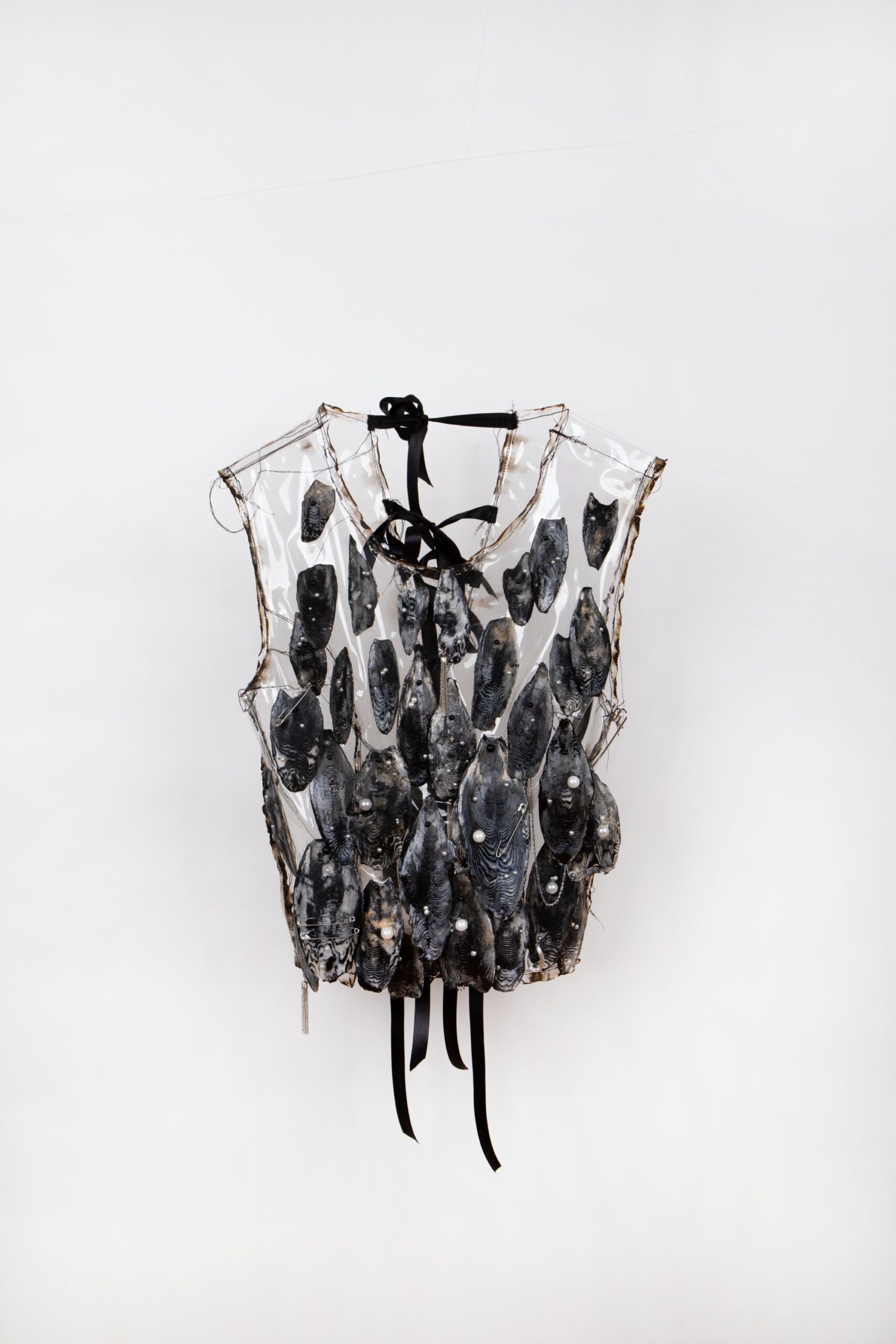
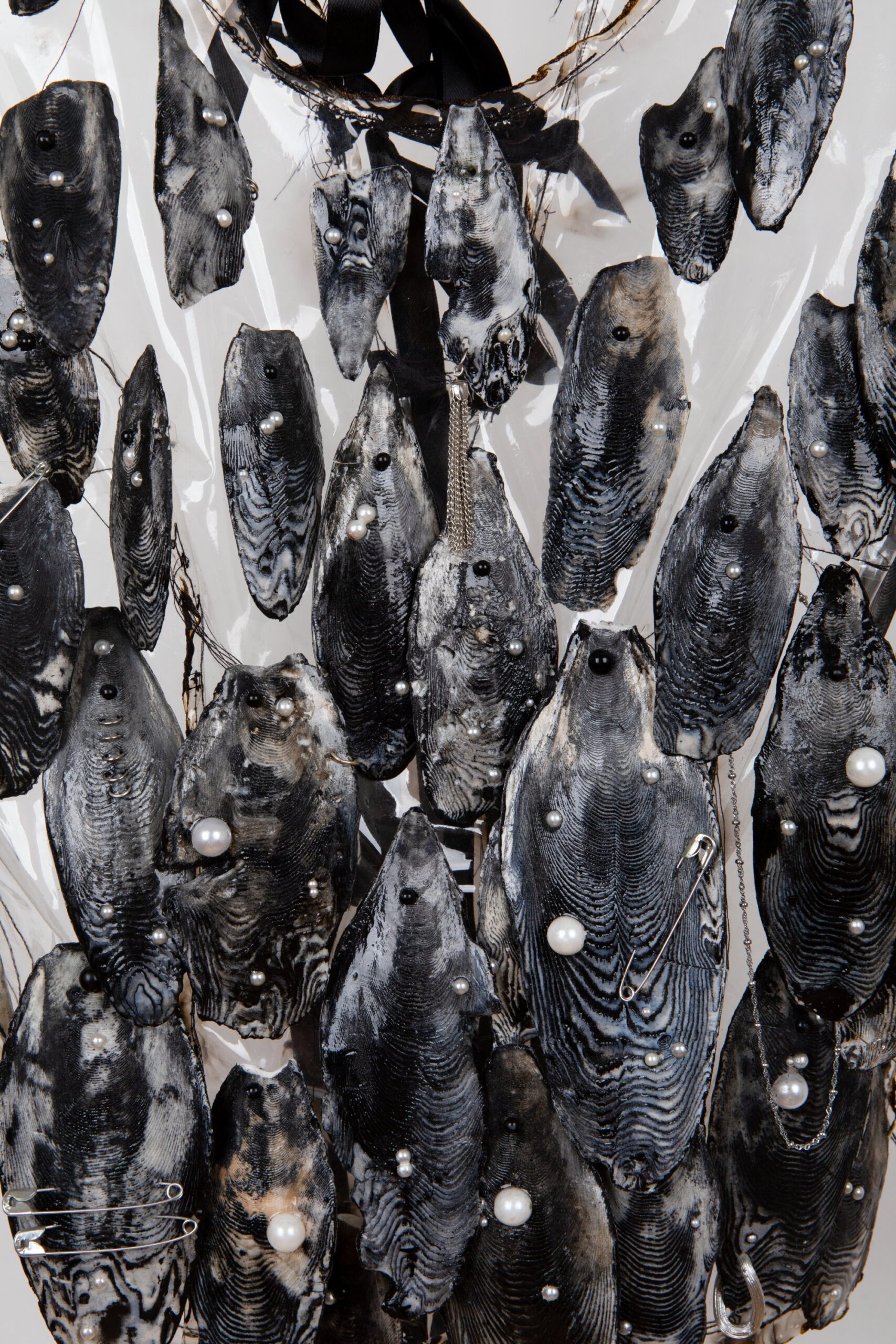
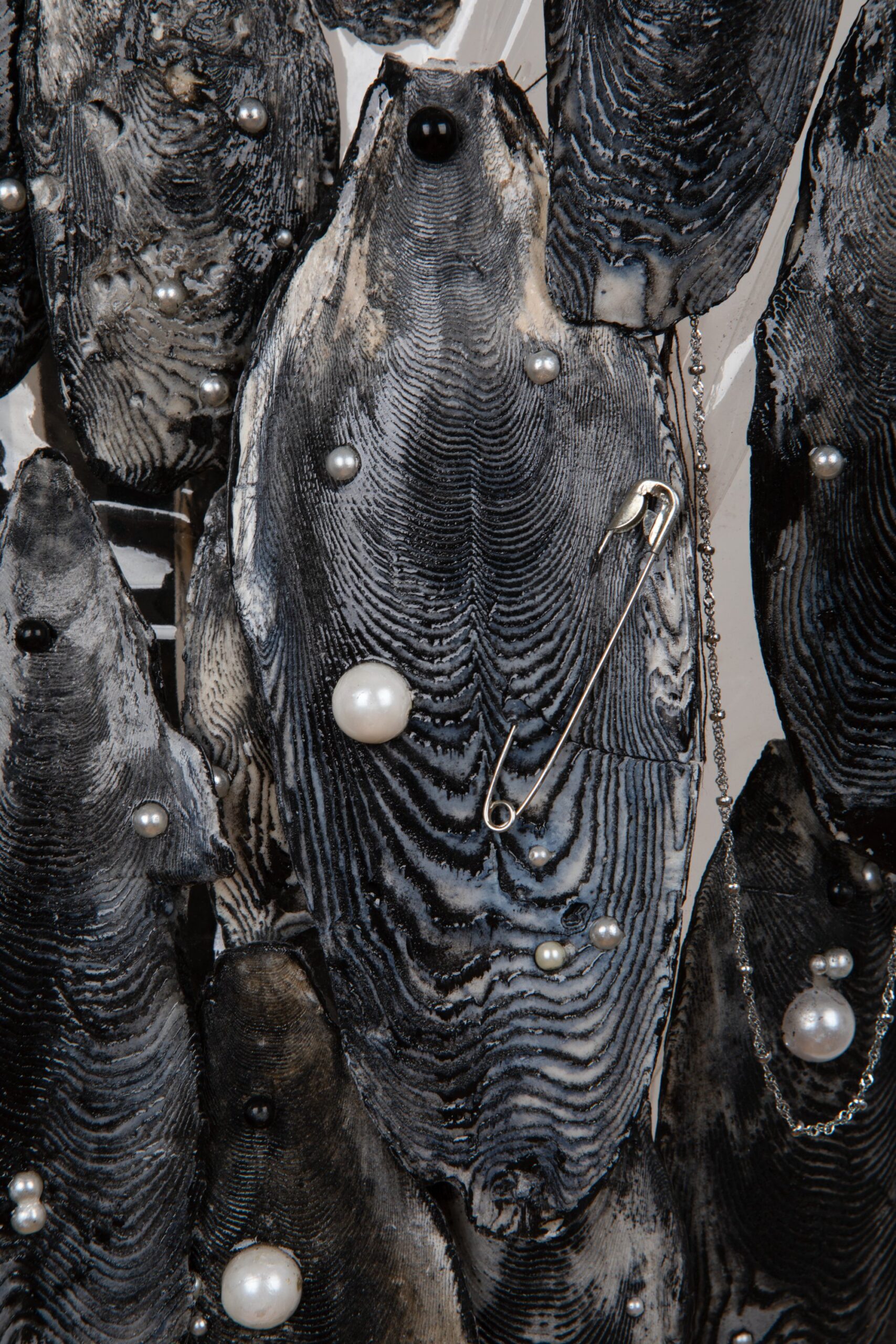
The Ika top centers on discarded cuttlefish bones scavenged from the shoreline during a trip to Naxos. After being cleaned and sanded, the bones were submerged in organic ink, allowing the material to dictate its own saturation. The undulating lines, resembling topographic maps, are the natural chambers of the bone’s ventral side. Being inherently porous, the ink was selectively absorbed by the bone before being dried and sealed with varnish. These elements were then hand-sewn onto a structured bodice patterned and constructed from transparent plastic tablecloth—the kind typically reserved for outdoor tables. The top was stitched continuously without any loose threads being trimmed, mimicking the frantic, mechanical repetition of a malfunctioning sewing machine, while the edges were intentionally scorched as a nod to the cigarette burns that inevitably scar these domestic plastics. Historically, the dual nature of the cuttlebone – rigid on one side, yet soft and porous on the other – made it an ancient, low-tech tool for metal casting. For millennia, its heat-resistant properties were utilized by seaside civilizations, from ancient Mediterranean smiths and early Celtic artisans crafting silver buckles to Renaissance goldsmiths in Florence, who used them as quick, ephemeral molds for signet rings. Homage is paid by The Ika top to this deep-rooted history of metalsmithing, but subverted: rather than the bone being treated as a disposable mold, the material itself is elevated into the jewel, complemented by pearls, safety pins, and silver paraphernalia embedded directly into the design. This piece is 1/1 and handmade in our studio in Athens.
